


Under-eye hollowness, puffiness and dark circles can look similar but have different causes. Dermal filler and fat grafting add volume; they are not interchangeable with surgery to address eyelid bags or excess skin. An examination should establish the concern before a treatment is selected.
Dermal filler versus fat grafting
Dermal fillers use an injectable product, often based on hyaluronic acid. Fat grafting transfers your own fat from a donor area to the face. Both require careful selection and technique, and neither guarantees a smooth contour or a particular duration of improvement.

What does fat transfer involve?
Fat is collected from another part of the body, processed and placed in selected areas. This creates both a donor site and an injection site to consider during recovery. Some transferred fat may be reabsorbed, and contour or volume can change. Further treatment may be needed.
Using your own tissue does not make the procedure risk-free. Discuss donor-site healing, lumps, irregularities, infection and other risks before deciding.
What should you know about filler?
The product, intended treatment area, existing filler and medical history affect suitability. Ask which product is proposed, its authorization for the intended use, expected duration and how complications would be managed. Duration varies; a fixed six- or twelve-month interval should not be assumed.
Filler can cause swelling, bruising, lumps and other complications. Rare injection into a blood vessel can cause tissue damage, vision loss or stroke. Facial fat transfer also carries a rare risk of serious vision complications. These are medical procedures requiring a qualified clinician and an individual risk discussion.
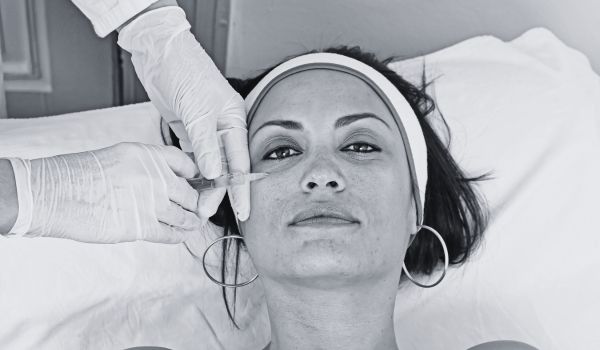
Hollows are different from under-eye bags
Adding volume is not the right solution for every shadow or bulge. If the main concern is prominent bags or excess lower-eyelid skin, discuss lower blepharoplasty and its limitations. A clinician may recommend a different approach or no procedure.
Recovery, longevity and previous treatments
Plan for possible bruising and swelling after either treatment. Fat grafting also involves donor-site recovery. Ask for an individual timetable rather than assuming filler has no downtime. Explain any previous filler or surgery; do not assume that every product can be dissolved or that moving from filler to fat transfer is straightforward.
Consultation questions
- What is causing the hollowness, bag or shadow?
- Why is this treatment suitable, and what alternatives exist?
- What are the risks for my eye health and previous treatments?
- What recovery, follow-up and possible further treatment should I plan for?
- What is included in the quotation?
Consult our surgeon biographies and the current fee table. Confirm treatment availability and an individual quotation with the clinic; longevity does not guarantee lower lifetime cost.
Discuss your concern in Richmond Hill
Grand Genesis Plastic Surgery welcomes patients from Richmond Hill, Toronto and the GTA. Request a consultation or call 416-878-3134.
General safety references: FDA dermal filler risk information and ASPS facial fat-transfer risk information. Individual assessment is essential.



Leave A Comment